Why orthopedic urgent care clinics are replacing the next-day physician over-read with AI

- Pauline Beaumel, AZmed

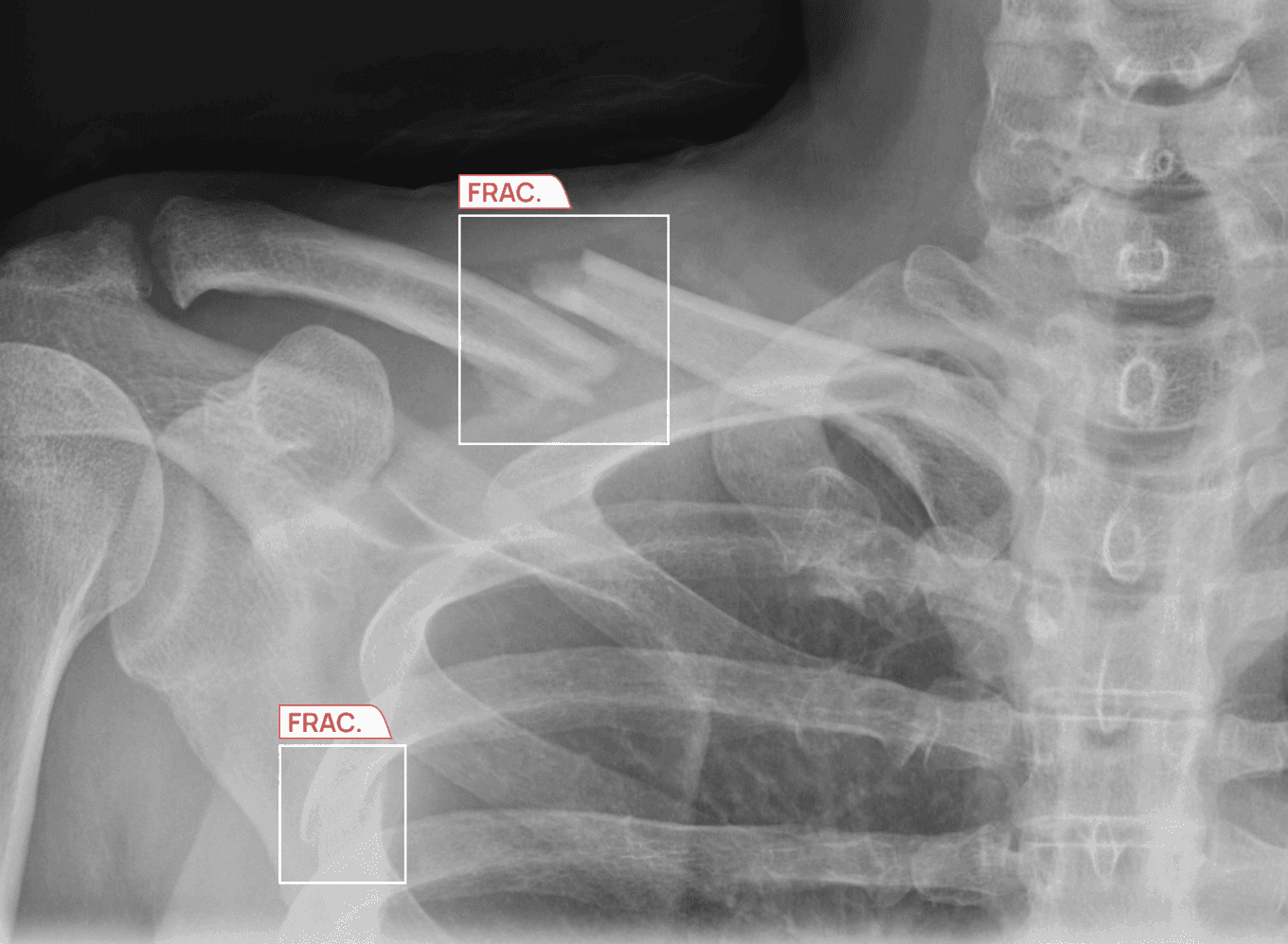
Across the United States, physicians at orthopedic urgent care clinics routinely review the prior day’s X-rays. Most of the time, these reviews validate what has already been identified by the advanced practice provider (APP). Some identify a discrepancy; a small number of those discrepancies involve a patient who has gone home, received provisional reassurance, and now requires a phone call to bring them back.
This is the over-read loop. It is not a failure in the APP staffing model. It is a structural element of orthopedic urgent care radiology that cannot be completely solved using clinical proficiency; the issue is not who reads the image, it is when. The introduction of an artificial intelligence (AI) second reader to urgent care X-ray settings changes the timing of this process; AI evaluates every diagnostic study at acquisition and provides the APP with an independent check before the patient leaves the office.
This article explains why the over-read loop exists, provides the results of studies evaluating APP fracture X-ray reading accuracy, and discusses how utilizing AI as a second reader can modify the clinical and liability landscape for the practices that use these tools.
The expansion of APP-staffed orthopedic urgent care across the U.S.
Orthopedic urgent care services represent one of the fastest-growing healthcare delivery models in the U.S. today. In the past years, APP-staffed urgent care visits increased from 282,408 in 2013 to 2,188,228 in 2019, representing a compound annual growth rate (CAGR) of 40.7%, while MD-staffed urgent care visits increased only 2.8%.¹ Advanced imaging utilization in APP-staffed settings also increased at a 30.5% CAGR, reflecting a broader shift in advanced practice provider radiology workflows.¹
The states with the greatest concentration of APP workforce growth are also important markets for orthopedic care delivery. The rise in the number of PAs is reflected in workforce growth from 2020 to 2024, with Florida increasing by 34.3%, California by 31.9%, Oregon by 27.8%, and Illinois by 25.9%.² A separate analysis of orthopedic care demand using Google Trends shows that online search behavior can help quantify regional orthopedic demand across the United States.⁴ Together, these numbers show a structural shift in who provides orthopedic care and why orthopedic urgent care staffing is becoming a long-term operational issue.
Five-year case outcome data from one real-world orthopedic urgent care center in Florida shows that non-operative physicians and physician extenders treated and managed the vast majority of presenting patients within their clinical scope, with very few patients needing emergency transfer.³ This model is effective; APPs have the clinical training and experience necessary to manage most trauma-related presentations in an urgent care environment. However, the lack of access to a radiologist who is physically present creates gaps at the level of diagnostic interpretation for orthopedic urgent care imaging.
The American Academy of Orthopaedic Surgeons anticipates that the United States will have a shortage of 23,000 orthopedic physicians by 2040.⁵ The gap between imaging volume and specialist availability will be a structural reality for the next 20 years, not a short-term staffing fluctuation. APP-supported models will be scalable at the infrastructure level through urgent care radiology AI as an adjunct to existing processes, especially as AI in orthopedic urgent care deployment becomes part of routine workflow planning.
What the over-read loop actually costs
Urgent care over-read workflows are established. In 2015, 58% of urgent care centers sent all studies to be over-read by a radiologist, an increase from 51% the year before.⁶ The dominant workflow is next-day review. APPs read films on-site, make clinical decisions, and the following morning a radiologist confirms or corrects the clinical interpretation made by the APP. This physician over-read urgent care workflow is the foundation of the current urgent care X-ray workflow.
The limitation of the next-day review model is not the over-read discrepancy rate; most reads are correct. A community hospital study of 16,111 plain radiograph reads found 1,044 discrepancies between emergency physician and radiologist interpretations, representing an overall discrepancy rate of about 6.5%. Most were minor: only 1.7% of discrepancies required return to the ED for further treatment, equal to about 0.1% of the full cohort.⁷ Although these rates may appear low, scale changes their meaning. If 50 X-rays are read per day at an urgent care clinic, a 0.1% return-for-treatment rate means roughly 1 patient recall every 18 to 20 clinic days. Across a 10-site urgent care network, that becomes approximately 1 return-for-treatment discrepancy every 2 clinic days.
The more significant cost of the next-day review model is timing. In a study of clinically important diagnostic imaging discrepancies by radiology trainees in an emergency department, 67.9% of patients had already left the department before the discrepancy notification was sent.⁸ The main clinical consequences were change in referral to a clinical subspecialty in 57.1% of discrepancy cases, change in clinical management in 25%, and change in surgical management in 21.4%.⁸ This is the next-day radiology review problem that reducing overnight over-read is meant to address.
The over-read loop is at its worst not necessarily because of an incorrect read, but because an accurate read occurs after the patient has already been discharged based on the preliminary interpretation. Body region is also a factor. In a study of 2,947 ankle X-rays taken in an emergency department, navicular fractures were missed on initial reports 40% of the time, and cuboid fractures 33.3% of the time.⁹ Minor discrepancies were significantly more common between 8:00 PM and midnight, while major discrepancies were numerically higher overnight.⁹ This timeframe corresponds to the types of fractures seen in busy orthopedic urgent care shifts, where subtle extremity fractures present after hours and only an APP may be the primary clinician reading the film.
This can create increased liability exposure for the supervising physician because NPs and PAs may be making diagnostic decisions based on the radiograph.¹⁰ In one orthopedic malpractice-claims analysis, missing radiographic diagnosis of bone fractures was identified as a key error in multidisciplinary team claims involving orthopedists and radiologists.¹² Two of the states with the fastest-growing number of APPs, California and Florida, are also among the states with the highest total malpractice payouts nationally, at $2.7B and $3.1B respectively.¹¹ The total cost of PA malpractice payments in the U.S. has been approximately $678M.¹¹ When there is no AI second reader in urgent care X-ray interpretation and a discrepancy occurs the next morning after the patient has left, the liability chain may involve the supervising physician. This illustrates the urgent care physician liability X-ray risk in practical terms.
How APPs actually perform on fracture X-rays without AI
The consistency between previous research regarding APPs’ ability to read images for fracture identification illustrates that APPs are not bad readers of these films; they are not specialists. This creates a measurable accuracy gap for urgent care teams’ necessary confidence in X-ray readings, as well as the APP diagnostic confidence X-ray support needed in the clinic.
A multi-reader study comparing 24 readers across 12 anatomical sites from 12 hospitals demonstrated that readers without adequate musculoskeletal (MSK) training, such as physician assistants, primary care physicians, and emergency physicians, had a decreased miss rate of 61% when receiving AI support. Comparatively, a reader group with adequate MSK specialty training, such as radiologists and orthopedic surgeons, had a 38% decrease in miss rate when provided AI support.¹³ Therefore, the biggest accuracy benefit was afforded to those who had the greatest need: an APP taking care of an orthopedic urgent care patient without AI support. This is where AI fracture support for APP workflows becomes important in the clinic.
Another study evaluated standalone AI performance on 2,626 extremity radiographs from a single institution in Ohio and included a multi-reader study with 24 readers: 8 emergency physicians, 8 non-MSK radiologists, and 8 MSK radiologists. Overall reader sensitivity improved from 86.5% without AI assistance to 95.5% with AI support. Reader accuracy increased by 0.047, and average reading time decreased by 27%, equal to approximately 7.1 seconds per exam.¹⁴ Emergency physicians and non-MSK radiologists showed greater improvement than MSK radiologists, making emergency physician fracture sensitivity and physician assistant X-ray accuracy directly relevant to this use case.
A further multi-center study evaluated miss rate and sensitivity for both radiology resident and specialist groups through their radiology reports, showing a total miss rate of 6.7% and overall sensitivity of 0.86. For some body regions, overall reader sensitivity was less than 90%, indicating that these studies were not outliers but reflective of the current standard for non-specialist X-ray interpretation in high-volume departments.¹⁵ They directly relate to APPs interpreting X-ray films in the orthopedic urgent care setting at the end of a busy afternoon shift. Thus, AI X-ray non-radiologist clinician support is now an important consideration for urgent care imaging.
What changes when AI second reader urgent care X-ray support goes live
In urgent care facilities that utilize X-ray interpreters, utilizing an AI second reader will not modify who is responsible for determining the course of treatment. The APP will still be responsible for interpreting the X-ray, documenting the findings in the patient's medical record, and providing care for the patient. However, a validated deep learning algorithm will also interpret the X-ray and highlight key areas of concern shortly after image acquisition, before the patient exits the care pathway. This scenario reflects the direct use case of an AI second reader urgent care X-ray workflow.
By providing near-real-time evaluation of the X-ray, the AI second reader addresses inefficiencies in the current over-read loop. Rather than waiting for a radiologist’s evaluation the following morning after the patient has left the clinic, the AI second reader performs this review at the time the image is acquired. Consequently, discrepancies can be recognized immediately by the APP and can be reassessed, referred, or confirmed based on the clinical context while the patient is still present.
For APPs with limited previous training in interpreting MSK images, AI provides a 61% relative reduction in missed fractures. Therefore, roughly 3 out of 5 fractures that would otherwise be missed can now be identified and evaluated at the point of care, rather than the following day.¹³ This results in a real-time second reader X-ray workflow driving operational value through reduced missed fractures.
For the supervising physician, the requirement to over-read APP interpretations the day following the patient's appointment changes from a clinical safety net to a quality assurance process. The physician no longer has to look back after the patient has left to see what the APP may have missed, but can confirm the APP's interpretation based on a study that was already cross-checked in real time when the original X-ray was taken. Thus, the supervising physician's morning over-read changes from a method to minimize legal liability to a routine audit process.
There is also a legal component to this process. In a randomized trial published in NEJM AI, when an AI system flagged an abnormal finding that a radiologist missed, 72.9% of study participants found the radiologist liable. When both the radiologist and AI failed to detect the abnormality, only 50% of participants found the radiologist liable.²¹ The standard of care is shifting; if an orthopedic urgent care center has access to an AI second reader for X-ray review in an urgent care situation but does not use it, its liability calculus may be substantially different than if it had never had access to this AI system. This is also why missed fracture liability urgent care discussions now increasingly include AI availability.
Why this is important for pediatric urgent care presentations
Orthopedic urgent care centers often care for children. Elbow and wrist fractures in children are among the regions most affected by radiograph misinterpretation in pediatric emergency settings.²³ Children have different bone anatomy than adults; thus, the APP or emergency physician without subspecialty pediatric musculoskeletal training faces an actual accuracy gap. The same issue applies to nurse practitioner X-ray AI support when pediatric fracture patterns are subtle or difficult to interpret.
In a multicenter study published in Academic Radiology in November 2025 that evaluated AZtrauma specifically for the identification of musculoskeletal fractures in children, AZtrauma demonstrated sensitivity of 96%, specificity of 86%, and AUC of 0.94 in pediatric patients.¹⁷ A different pediatric study of 878 patients determined that AZtrauma's performance was equal to that of senior radiology residents and greater than that of emergency physicians without AI. The sensitivity of emergency physicians without AI was 82%. AZtrauma identified 3 fractures that a specialist pediatric radiologist had initially missed.¹⁸ The AI second reader benefit for pediatric presentations is a documented, consistent pattern across multiple pediatric datasets.
Rayvolve® received FDA 510(k) clearance in 2024 for use in adult and pediatric patients aged 2 years and older. The FDA summary reports pediatric standalone testing on 3,016 radiographs, with sensitivity of 96.1%, specificity of 86.0%, and AUC of 94.0%.¹⁹ This is a validated, cleared tool for the pediatric population typically treated by orthopedic urgent care clinics.
Regulatory framework for artificial intelligence X-ray support in non-radiologist settings
Rayvolve’s® FDA 510(k) indications for use relate directly to urgent care X-ray support because the software is cleared as a computer-assisted detection and diagnosis tool to assist radiologists and emergency physicians in detecting fractures during the review of musculoskeletal radiographs in patients aged 2 years and older. Emergency physicians and radiologists are specifically mentioned as intended users.¹⁹ For APP-led urgent care workflows, deployment should be aligned with the product labeling, supervising-physician model, user training, and local scope-of-practice rules.
The NICE Early Value Assessment of AI technologies to help detect fractures on X-rays in urgent care found that these tools may improve fracture detection without increasing the risk of incorrect diagnoses. NICE also noted that AI technologies may help reduce variation in standard care by providing a consistent baseline for X-ray interpretation across centers with different staff experience or resources.²²
One of the largest clinical validation studies regarding the use of an AI X-ray tool ever conducted was Cohen et al. 2026, which assessed the complete Rayvolve® AI Suite, including AZtrauma. The assessment was performed on the entire AI suite using 258,373 X-rays taken across 100 clinical centers in 26 countries. Each X-ray included in the study was reviewed through dual-reader consensus. AZtrauma achieved AUC of 98.3%, sensitivity of 97.4%, and specificity of 96.4%.¹⁶ This documented evidence serves as the basis for using AI to provide clinical support as a second reader for urgent care X-rays. This tool is clinically cleared for use and validated internationally.
What deploying AI as a second reader looks like
For those who provide urgent care via an orthopedic clinic, deployment is straightforward if that organization currently has an existing Picture Archiving and Communication System (PACS). AZtrauma, from the Rayvolve® AI Suite, integrates with PACS through Digital Imaging and Communications in Medicine (DICOM). As X-rays are taken and sent directly to the PACS, the AI evaluates the image as part of the imaging workflow. A secondary DICOM output file containing annotated findings can then be displayed within the APP's current worklist.²⁰ When deployed within the existing PACS workflow, the AI output can be reviewed alongside the imaging study, reducing the need for a separate reading environment.
The AI identifies areas of interest and highlights potential fractures, dislocations, and joint effusions for the APP to interpret. The APP still has complete clinical accountability for interpreting films and making a patient decision regarding the study. What changes is that the human clinician now has access to a validated, immediate, and fatigue-free second opinion on every image prior to discharging the patient from care. In practical terms, same-day fracture reporting AI support changes the timing of review, not the responsibility for reporting.
In practices where the supervising physician is the mechanism by which discrepancies are identified, the question becomes whether the current model can continue to support patient safety as the volume of APP-staffed urgent care visits increases. With APP-staffed visits growing at an annual rate of 40.7%¹ and the projected shortfall of orthopedic physicians reaching 23,000 by 2040,⁵ the number of next-day over-read reviews that a supervising physician will need to complete will continue to increase. The AI second reader for urgent care X-ray review does not remove the role of the supervising physician. It provides a mechanism by which the next-day over-read does not serve as the last opportunity for every study to be reviewed before patient care is corrected.
A structural solution to a structural problem
The over-read loop exists because APP-staffed urgent care was based on the availability of a physician the following morning. It served as a practical solution to an existing practice limitation. It was not established to solve the problem created for the patient who went home after being seen by the APP and needed something different before the radiologist reviewed the study.
AI second reader support for urgent care X-ray studies resolves this gap systemically rather than individually. The use of an AI second reader for the APP does not require the APP to develop enhanced skills as a musculoskeletal radiologist. The APP is granted a real-time equivalent to an expert second opinion for every X-ray that they order, in the same workflow they already use, before the patient leaves the building.
In California, Florida, Oregon, and Illinois, where APP growth is among the fastest in the country and demand for orthopedics is high, clinics deploying AI complementary support tools are developing the infrastructure needed for a scalable model of care. Those clinics that continue to operate based solely upon the next-day over-read method are creating a bottleneck.
AZtrauma is cleared by the U.S. FDA to assist emergency physicians and radiologists in detecting fractures, joint effusions, and dislocations. It has been validated in one of the largest published X-ray AI studies, included in NICE’s early value assessment for urgent care fracture detection, and specifically validated for pediatric patients. AZmed's AI second reader for urgent care X-rays is designed for complementary clinical support and shows how AI complementary support clinical practice can address a structural gap without replacing clinical responsibility.
References
- Rashid T, Khurana A, Sharpe R. Increases in Urgent Care Utilization of Advanced Imaging Correlates with Increases in Advanced Practice Provider Staffing. Abstract 5224. Presented at: ARRS 2024 Annual Meeting. American Roentgen Ray Society; 2024.
- Gooch K. PA Workforce Growth by State. Becker's Hospital Review. February 20, 2026.
- Henry TW, Lutsky K, Beredjiklian P, et al. The Five-Year Growth of an Orthopedic Urgent Care Center: Identifying Patient and Center Trends. Cureus. 2022;14(12):e32176. doi:10.7759/cureus.32176.
- Qiu A, Meadows K, Ye F, Iyawe O, Kenneth-Nwosa K. Quantifying Patient Demand for Orthopedics Care by Region Through Google Trends Analysis: Descriptive Epidemiology Study. Online Journal of Public Health Informatics. 2025;17:e63560. doi:10.2196/63560.
- Kadaei M. Boom or Bust? The Backlog Effect on 2024's Orthopedic Market. Ambula Healthcare. April 19, 2024.
- Journal of Urgent Care Medicine. Roundtable: Expert Perspectives on X-Ray Over-Read Strategies in Urgent Care. Journal of Urgent Care Medicine. April 1, 2016.
- Tranovich MJ, Gooch CM, Dougherty JM. Radiograph Interpretation Discrepancies in a Community Hospital Emergency Department. Western Journal of Emergency Medicine. 2019;20(4):626-632. doi:10.5811/westjem.2019.1.41375.
- Friedman SM, Merman E, Chopra A. Clinical impact of diagnostic imaging discrepancy by radiology trainees in an urban teaching hospital emergency department. International Journal of Emergency Medicine. 2013;6:24. doi:10.1186/1865-1380-6-24.
- York TJ, Jenkins PJ, Ireland AJ. Reporting Discrepancy Resolved by Findings and Time in 2947 Emergency Department Ankle X-rays. Skeletal Radiology. 2020;49(4):601-611. doi:10.1007/s00256-019-03317-7.
- Shufeldt J, Sniegowski A. Malpractice Trends in Urgent Care and Retail Medicine. Journal of Urgent Care Medicine. March 1, 2014.
- Beardsley A. Must-Know Medical Malpractice Statistics for 2023. Berxi. March 26, 2024.
- Casali MB, Blandino A, Del Sordo S, et al. Alleged malpractice in orthopaedics. Analysis of a series of medmal insurance claims. Journal of Orthopaedics and Traumatology. 2018;19:7. doi:10.1186/s10195-018-0500-4.
- Anderson PG, Baum GL, Keathley N, et al. Deep Learning Assistance Closes the Accuracy Gap in Fracture Detection Across Clinician Types. Clinical Orthopaedics and Related Research. 2023;481(3):580-588. doi:10.1097/CORR.0000000000002385.
- Fu T, Viswanathan V, Attia A, Zerbib-Attal E, Kosaraju V, Barger R, et al. Assessing the Potential of a Deep Learning Tool to Improve Fracture Detection by Radiologists and Emergency Physicians on Extremity Radiographs. Academic Radiology. 2024;31(5):1989-1999. doi:10.1016/j.acra.2023.10.042.
- Huhtanen JT, Nyman M, Sequeiros RB, Koskinen SK, Pudas TK, Kajander S, et al. Discrepancies between Radiology Specialists and Residents in Fracture Detection from Musculoskeletal Radiographs. Diagnostics. 2023;13(20):3207. doi:10.3390/diagnostics13203207.
- Cohen E, Ouertani MS, Beaumel P, et al. Performance of a complete AI radiographic suite across 258,373 X-rays from 26 countries: A worldwide evaluation. Radiography. 2026;32:103361. doi:10.1016/j.radi.2026.103361. https://pubmed.ncbi.nlm.nih.gov/41762966/
- Raj S, Sadegi B, Simon J. Enhancing Pediatric Fracture Detection: Multicenter Evaluation of a Deep Learning AI Model and Its Impact on Radiologist Performance. Academic Radiology. 2025. doi:10.1016/j.acra.2025.11.022.
- AZmed. How to choose the best AI for fracture detection. AZmed. April 6, 2026.
- U.S. Food and Drug Administration. Rayvolve 510(k) Premarket Notification K240845. U.S. Food and Drug Administration; 2024.
- AZmed. AI in Fracture Detection. AZmed.
- AZmed. Beyond the Algorithm: Rethinking Liability and Trust in AI Radiology. AZmed. June 6, 2025.
- National Institute for Health and Care Excellence. Artificial intelligence technologies to help detect fractures on X-rays in urgent care: early value assessment. HealthTech Guidance 739. NICE; 2025.
- Kargl S, Pumberger W, Luczynski S, Moritz T. Assessment of interpretation of paediatric skeletal radiographs in the emergency room. Clinical Radiology. 2019;74(2):150-153. doi:10.1016/j.crad.2018.06.024.
Regulatory information
US - Medical device Class II according to the 510K clearances. Rayvolve: is a computer-assisted detection and diagnosis (CAD) software device to assist radiologists and emergency physicians in detecting fractures, dislocations and effusions during the review of radiographs of the musculoskeletal system. Rayvolve is indicated for the adult and pediatric population (≥ 2 years).Rayvolve PTX/PE: is a radiological computer-assisted triage and notification software that analyzes chest x-ray images of patients 18 years of age or older for the presence of pre-specified suspected critical findings (pleural effusion and/or pneumothorax). Rayvolve LN: is a computer-aided detection software device to assist radiologists to identify and mark regions in relation to suspected pulmonary nodules from 6 to 30mm size of patients of 18 years of age or olderEU - Rayvolve: Medical Device Class IIa in Europe (CE 2797) in compliance with the Medical Device Regulation (2017/745). Rayvolve is a computer-aided diagnosis tool, intended to help radiologists and emergency physicians to detect and localize abnormalities on standard X-rays.Caution: The data mentioned are sourced from internal documents, internal studies and literature reviews. It is for distribution to Health Care Professionals only and should not be relied upon by any other persons. Carefully read the instructions for use before use. Please refer to our Privacy policy on our website For more information, please contact contact@azmed.co.AZmed 10 rue d’Uzès, 75002 Paris - www.azmed.co - RCS Laval B 841 673 601© 2026 AZmed – All rights reserved. MM-26-27