Why AI worklist triage on X-rays changes throughput and case mix

- Pauline Beaumel, AZmed

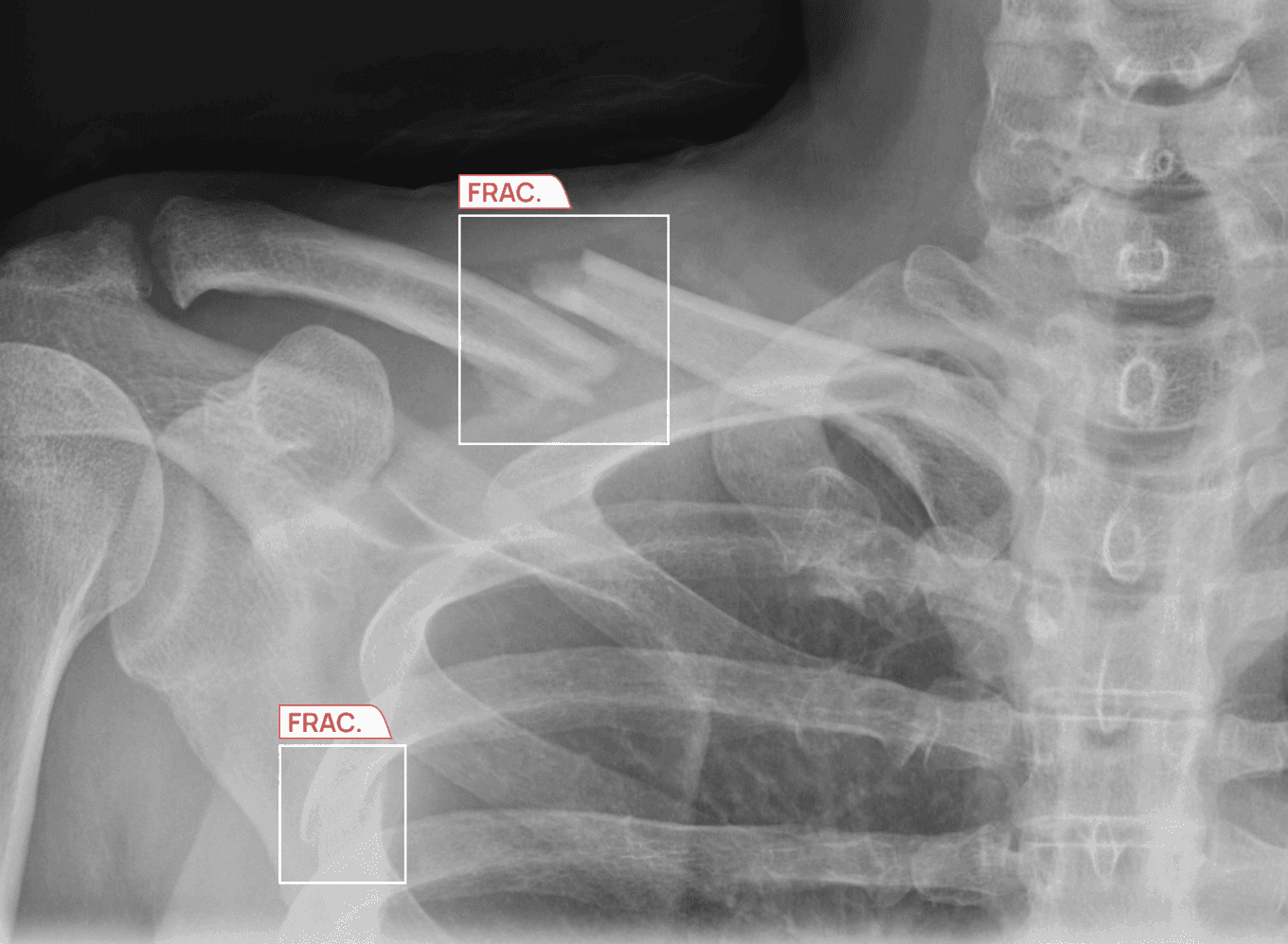
AI triage platforms process incoming imaging examinations and automatically stratify them based on urgency and clinical priority. Time-sensitive findings such as fractures, pulmonary nodules, cardiomegaly, and many other such findings in medical imaging are prioritized and routed to the top of radiologists' worklists.
Typically, cases in healthcare centers are interpreted in the order of arrival. However, this first-in, first-out model delays critical interpretations and bottlenecks the overall radiology workflow.
In this blog, we’ll cover what AI worklist triage denotes, how it improves workflows, cite a few studies that have highlighted the positive impact of implementing AI tools, and explain how AZmed tools are helping over 2,500 healthcare centers worldwide optimize radiologists' throughput and case mix.
Key points of summary:
- AI worklist triage on X-rays refers to the use of AI algorithms to automatically analyze X-ray images and prioritize urgent cases for the radiologist to review. This helps ensure faster diagnosis and treatment of urgent cases, while routine X-rays are moved to the bottom of the list.
- AI triage improves throughput in X-ray workflows by reducing turnaround time (TAT), lowering interpretation effort, and optimizing resource use.
- Changing the case mix through AI triage also reduces radiologists’ fatigue, improves diagnostic accuracy, and saves more time on complex or high-impact cases.
- AZmed’s Rayvolve® AI Suite has a total of four (AZtrauma, AZchest, AZmeasure, AZboneage) clinically validated, workflow-integrated solutions that make medical triage work in real workflows.
What does “AI Worklist Triage” actually mean in radiology?
AI worklist triage in radiology refers to the use of AI algorithms to automatically analyze original X-ray images at acquisition and prioritize urgent cases for the radiologist to review.
Traditionally, healthcare centers use a First-In, First-Out (FIFO) model for image interpretation.
But with the growing volume of imaging, this approach fails because it processes cases sequentially, regardless of clinical urgency. This can introduce clinically meaningful delays in interpreting time-sensitive findings. Radiologists spend substantial time reviewing routine X-rays, which reduces available time for critical cases.
This also leads to radiologist burnout in the long run.
Does AI triage improve throughput in X-ray workflows?
Multiple studies report that AI triage can improve throughput in X-ray workflows.
- At RSNA 2023, SimonMed Imaging reported a year-over-year evaluation of AZtrauma for fracture detection and AI-supported X-ray worklist prioritization: Within the Rayvolve® AI Suite, AZtrauma is designed to detect fractures and flag fracture-positive examinations for earlier review. Across 159,601 examinations in 2022 (non-AI) and 170,703 in 2023 (AI), the proportion of fracture-positive studies was higher during the AI period (11.8%) than the non-AI period (10.4%).
- Real-World evaluation of an AI triaging system for chest X-rays: A prospective clinical study highlights that AI-assisted CXR triage can accurately triage CXR findings, achieving a 77% reduction in turnaround time and 99% specificity in urgent cases, aiding critical decisions.
- Smart chest X-ray worklist prioritization using artificial intelligence: a clinical workflow simulation reported a significant reduction in report turnaround time for critical chest X-rays, with maximum RTAT for pneumothorax reduced to 979 minutes compared with 1,293–1,178 minutes under FIFO reading (p < 0.0001).
Using the right AI tool can improve how quickly cases move from image acquisition to a finalized report at your healthcare center. Here’s how these tools typically help.
How does AI triage improve throughput in X-ray workflows?
AI can improve throughput in X-ray workflows by prioritizing urgent cases, reducing turnaround time, and reducing reading time.
- Reduce turnaround time (TAT): AI tools enable radiologists to prioritize critical cases. This process includes identifying critical cases with an AI system and subsequently adjusting the radiologist's daily workflow, redistributing time to what matters most.
- Lower interpretive effort: In traditional workflows, radiologists have to review each X-ray manually to identify relevant findings. However, AI tools, like those in the Rayvolve® AI Suite, automatically highlight regions of concern. This reduces their cognitive effort and helps radiologists focus their attention on special cases.
- Optimize resource use: During off-hours or high workload periods, AI tools take care of routine X-rays, saving radiologists time on high-level interpretation, which ultimately leads to a better use of their available time.
Now, let’s understand how these tools work in practice.
How does triage AI change the “case mix” a radiologist sees?
AI triage changes a radiologist's case mix by effectively filtering and prioritizing studies, resulting in a workload that primarily consists of urgent, complex, or abnormal cases. Since AI largely handles routine or ‘normal’ cases, it frees radiologists' time to focus their human expertise where it is most needed.
Some of the top benefits of AI in radiology for case mix include:
- More time on complex or high-impact cases: The primary goal of triage AI is to flag critical findings and push those studies to the top of a radiologist's worklist for immediate review. Consequently, radiologists spend less time on routine, normal exams and more time on complex pathologies that require nuanced human judgment and consultation.
- Reduced radiologist fatigue: Even performing routine X-rays takes time and concentration, which weighs on cognitive load and can lead to exhaustion. AI screens out normal studies and pre-fills reports, which helps radiologists focus on important cases.
- Improved diagnostic accuracy: Lower fatigue and more time on complex cases can improve diagnostic performance and patient care.
To see these gains in daily practice, radiology teams need AI tools that are validated and easy to use. That’s where AZmed’s solutions come in.
How do AZmed’s clinically validated tools make AI triage work in real workflows?
AZmed’s Rayvolve® AI Suite has 4 clinically validated, workflow-integrated artificial intelligence solutions designed to make AI triage workable in routine workflows.
- AZtrauma: Detects and triages fractures, dislocations, and joint effusions, and flags examinations that may require immediate attention. In acute and trauma settings, this supports earlier review and timely orthopedic and surgical decision-making.
- AZchest*: Detects and triages chest X-rays with suspected pneumothorax, pleural effusion, or cardiomegaly, surfacing urgent thoracic studies.
- AZmeasure**: Provides automated osteoarticular measurements, reducing manual measurement burden and preserving time for higher-priority reads.
- AZboneage**: Calculates pediatric bone age automatically. In pediatric settings and imaging centers, this supports faster turnaround and consistency across high volumes.
AZmed’s tools have analyzed over 15,000,000 X-rays and are deployed in over 2,500 healthcare facilities worldwide.
All AZmed solutions integrate with PACS, helping ensure radiologists do not need additional steps to incorporate the tools into existing workflows.
Regulatory information
Regulatory informationEU - Rayvolve: Medical Device Class IIa in Europe (CE 2797) in compliance with the Medical Device Regulation (2017/745). Rayvolve is a computer-aided diagnosis tool, intended to help radiologists and emergency physicians to detect and localize abnormalities on standard X-rays.US - Medical device Class II according to the 510K clearances. Rayvolve is a computer-assisted detection and diagnosis (CAD) software device to assist radiologists and emergency physicians in detecting fractures during the review of radiographs of the musculoskeletal system. Rayvolve is indicated for the adult and pediatric population (≥ 2 years).Rayvolve PTX/PE: is a radiological computer-assisted triage and notification software that analyzes chest x-ray images of patients 18 years of age or older for the presence of pre-specified suspected critical findings (pleural effusion and/or pneumothorax). Rayvolve LN: is a computer-aided detection software device to assist radiologists to identify and mark regions in relation to suspected pulmonary nodules from 6 to 30mm size of patients of 18 years of age or olderCaution: The data mentioned are sourced from internal documents, internal studies and literature reviews. This material with associated pictures is non-contractual. Carefully read the instructions for use before use. Please refer to our Privacy policy on our website. For more information, please contact contact@azmed.co.AZmed 10 rue d’Uzès, 75002 Paris - www.azmed.co - RCS Laval B 841 673 601© 2026 AZmed – All rights reserved. MM-26-12* AZchest is CE-marked for detection of abnormalities on chest X-rays such as: consolidation, pleural effusion, pneumothorax, cardiomegaly, acute pulmonary edema, rib fractures and pulmonary nodules. It’s also FDA-cleared for two applications: detection of lung nodules (with Rayvolve LN) and notification and triage for pneumothorax and pleural effusion (with Rayvolve PTX-PE)** AZmeasure and AZboneage are only CE-marked and not available for the US Market at the moment