What is X-ray report pre-fill and how does it clarify X-ray communication

- Pauline Beaumel, AZmed

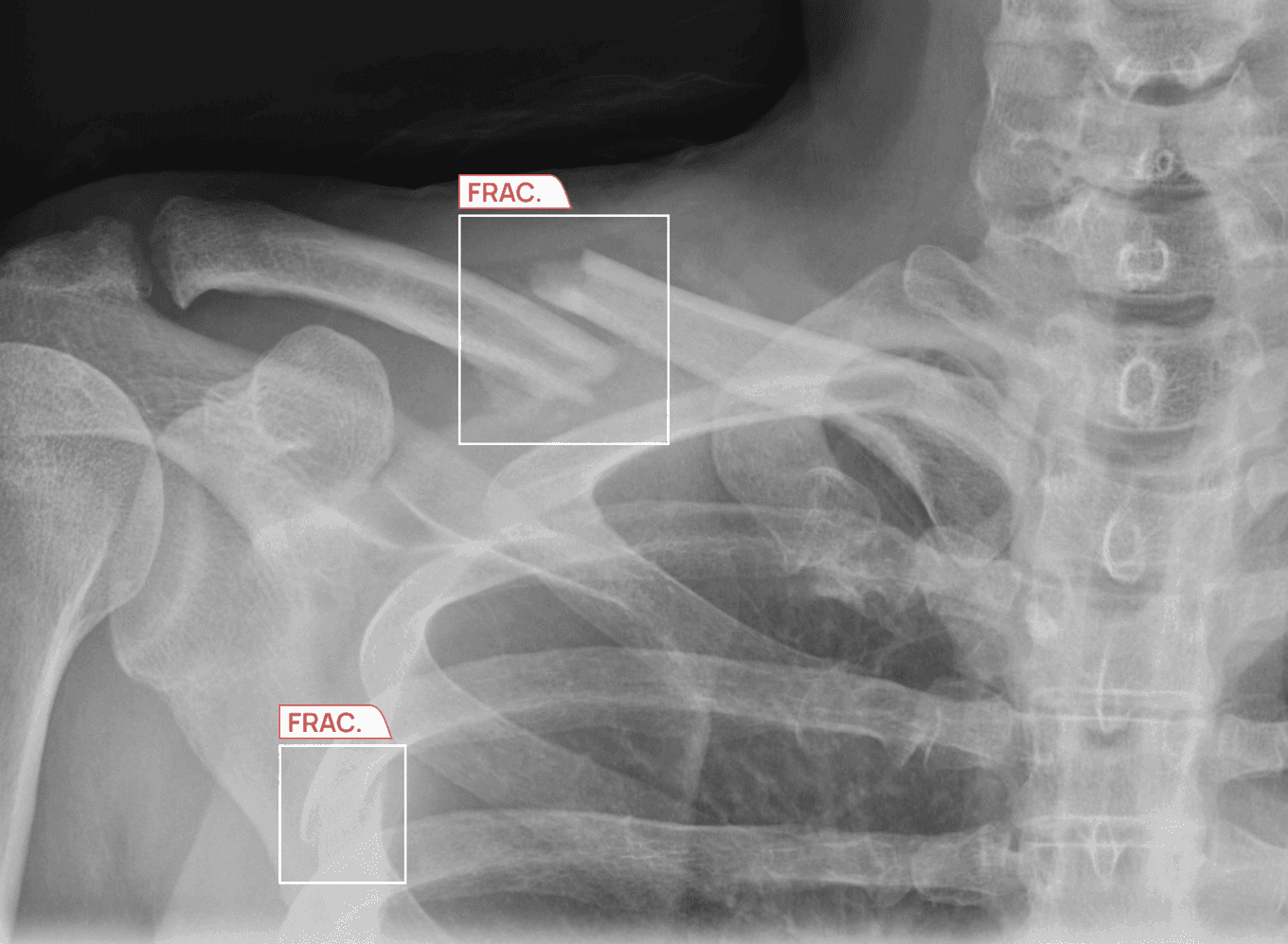
The main job role of a radiologist is to interpret medical images like X-rays and translate those complex visual patterns into precise, actionable language that guides the treatment of a patient.
But as case volumes keep rising, radiologists are under pressure to analyze multiple images or prepare multiple reports. To deliver reports quickly, they end up using freewriting that varies from one person to another, leading to miscommunication and unclear reports.
AI-assisted reporting, and particularly X-ray report pre-fill, is designed to address these communication gaps that quietly challenge radiologists every day. In this blog, we’ll cover why pre-fill reporting is gaining traction and share some practical examples of how healthcare centers are already deploying AZmed’s tools to reduce their manual workload.
What does “report pre-fill” mean in radiology?
Report pre-fill in radiology refers to generating an automated draft report based on detected imaging findings and prior structured data of patients. So instead of starting from a blank page, the radiologist begins with a structured outline that already includes the key observations identified in the scan.
It helps in reducing the time radiologists spend creating reports from scratch, allowing them to spend more time on interpretation.
Here’s how pre-filling of reports usually works:
- Image analysis: Advanced algorithms like those incorporated into the Rayvolve® AI Suite analyze the X-ray, scanning for specific abnormalities such as fractures, pleural effusions, cardiomegaly, or joint dislocations.
- Structured pre-fill: The system then translates these detections into standardized report language. This includes sentences or template fields that follow established radiology report templates, clinical terminology, exam title/technique, findings, and standardized impressions.
- Human validation: The radiologist reviews the pre-fills, confirms or corrects each point, and adds context before finalizing the report. Thus, they retain full control over the final report.
Studies such as Zhu et al. (2023),“Utilizing Longitudinal Chest X-rays and Reports to Pre-Fill Radiology Reports”, highlight how using pre-fill reports can help mitigate reporting errors for radiologists and improve reporting consistency.
Pre-fill vs automated reporting
Before we get into why pre-fill reporting is important, let’s quickly understand the difference between pre-fill and automated reporting.
They are both AI radiology methods used to streamline the report creation process, but they differ in their level of autonomy and the radiologist's role.
Automated reporting systems attempt to produce a complete, ready-to-send report without human verification. This model remains largely experimental as it raises ethical and medico-legal concerns. On the other hand, in pre-fill reporting, the final control rests with the radiologist who checks and validates the report.
Healthcare departments worldwide are adopting AI-assisted pre-fill reporting in their workflows because it streamlines manual report creation and allows radiologists to maintain full control over the process. Let’s understand this in more detail.
3 reasons why AI-assisted reporting matters for X-ray communication
Structured reporting in radiology, and particularly report pre-fill, addresses these communication gaps that quietly challenge radiologists every day.
Here are three reasons why it matters.
1. Consistency
Radiology report templates help reduce variation in phrasing across clinicians and departments. For example, two radiologists looking at the same X-ray might both identify a distal radius fracture.
But one may write “fracture of the left distal radius,” while another writes “nondisplaced fracture in the distal left radial shaft.”
Both are accurate, but the lack of reporting consistency can lead to confusion when reports are aggregated, audited, or shared across departments. AI-assisted pre-fill brings structure to this.
2. Clarity
Continuing with the benefit above, X-ray report pre-fill also helps radiologists get more clarity into multiple reports. For instance, in chest or trauma imaging, even subtle phrasing differences can affect clinical decisions. A term like “possible pneumothorax” carries a very different implication from “suspicion of pneumothorax.”
Report pre-fill tools encourage precision by automatically including key anatomical regions and findings, ensuring nothing is overlooked.
The radiologist then confirms or adjusts each entry. This helps improve reporting accuracy and also reduces radiologists' efforts to remember to mention every anatomical area.
3. Speed and safety
And finally, AI-assisted reporting helps radiologists reduce report turnaround time without compromising on patient safety.
This becomes extremely important when there is a rise in imaging volumes and not enough radiologists to interpret them. In emergency and trauma settings, time saved per case can determine whether a patient receives treatment within the critical window.
Report pre-fill helps with this by automatically filling in the details about the patient and findings, so radiologists can focus their time on interpretation and patient care. And because the final authority remains with the radiologist, it also ensures that patient safety isn’t compromised due to any misdiagnosis.
Radiologists across the world are already making use of AI report pre-fill to experience these benefits. Read on to see practical examples of a few use cases that you too can implement today.
Practical examples of report pre-fill in radiology X-ray
Here are a few examples of how radiologists are using the tools in the Rayvolve® AI Suite to implement report pre-fill into their workflows. These tools offer RIS-integrated reporting that sends structured findings directly from the Rayvolve® AI Suite into EDL/Evolucare systems. Let’s take a detailed look at the various tools present in this suite.
Trauma cases (AZtrauma)
AZtrauma, a flagship tool in the Rayvolve® AI Suite, is an FDA-cleared and CE-marked solution for fracture detection. It supports the detection of bone fractures, effusions, and joint dislocations, and translates those findings into a pre-fill report.
Instead of manually describing every suspected site, the radiologist begins with an organized draft highlighting the findings most relevant to the case. Then, they can focus their time on interpretation and patient care rather than creating this report from scratch.
Chest X-rays (AZchest)
In chest imaging, radiologists have to balance the demand for high throughput with diagnostic precision. AZchest helps with AI-assisted pre-fill for cardiac and pulmonary abnormalities, including pleural effusions, lung consolidations, and cardiomegaly.
When abnormalities are detected, AZchest pre-populates the report with concise, standardized sentences.
This semi-structured output gives radiologists a clear starting point for verification, while keeping full interpretive control in their hands.
Measurement and pediatric context (AZmeasure & AZboneage)
Entering quantitative data is another area where report pre-fill reduces friction.
AZmeasure, another tool part of the Rayvolve® AI Suite, automatically characterizes osteo-articular geometries, including angles, lengths, and positional relationships, and inserts these numerical results directly into the report. This eliminates the need for manual transcription from secondary measurement tools, cutting down on time and potential errors.
In pediatric imaging, AZboneage applies the same principle to age assessment. Based on the Greulich & Pyle atlas, the tool automatically calculates the child’s bone age and compares it statistically with chronological age. The results are then pre-filled into the report, creating a clear, structured summary that radiologists can immediately review and approve.
In all these tools, the radiologist remains crucial to the process, making the final call on every finding.
Read on to see how the tools we mentioned above integrate easily and quickly with your existing workflows.
How report pre-fill integrates with clinical workflows
We discussed how pre-filling of reports usually works. It starts with an image analysis, which AI tools pre-fill in the report, and at the end, the report is checked by the radiologist. A delay in any of these steps can hamper the entire workflow and make it difficult for radiologists to interpret the report on time. This defeats the entire purpose of using AI-assisted reporting.
That’s why AZmed’s report pre-fill fits naturally into the systems radiologists already use.
- It integrates directly within PACS and RIS environments and requires no new software or learning curve.
- Pre-filled reports from the Rayvolve® AI Suite appear as editable drafts or structured text fields inside the existing reporting window, creating a transparent radiology audit trail.
- These reports are then verified, modified, or rejected. Radiologists remain fully in control of every final report.
In Europe, all AZmed solutions are CE-marked and meet the strictest standards for safety and regulatory compliance. This approach ensures that workflow efficiency at your healthcare center never compromises clinical responsibility. Read on to find out more.
AZmed: Enabling radiologists with pre-fill reporting
Radiologists across 2,500+ healthcare centers are already using AZmed’s tools because the benefits are clear:
- Less repetitive writing: Pre-fill eliminates routine phrasing, allowing you to focus on interpretation and decision-making.
- Stronger medico-legal documentation: Standardized structure ensures findings are presented clearly.
- Faster turnaround times: Particularly in trauma and chest imaging, report pre-fill helps departments meet time-sensitive targets without compromising accuracy.
Here’s how Julien VIDAL, the CEO of AZmed, put it: "Pre-filling the report in the RIS erases clerical data entry and permits clinicians to focus on interpretation. The radiologist still remains the author of the record."
Discover how AZmed’s Rayvolve® AI Suite supports report pre-fill workflows that enhance accuracy, clarity, and efficiency. Book a call with our experts today!
Note: The report pre-fill solution is currently available in France only.
Regulatory information
EU - Rayvolve: Medical Device Class IIa in Europe (CE 2797) in compliance with the Medical Device Regulation (2017/745). Rayvolve is a computer-aided diagnosis tool, intended to help radiologists and emergency physicians to detect and localize abnormalities on standard X-rays.US - Medical devices Class II according to the 510K clearances.Rayvolve: is a computer-assisted detection and diagnosis (CAD) software device to assist radiologists and emergency physicians in detecting fractures during the review of radiographs of the musculoskeletal system. Rayvolve is indicated for the adult and pediatric population (≥ 2 years).Rayvolve PTX/PE: is a radiological computer-assisted triage and notification software that analyzes chest x-ray images of patients 18 years of age or older for the presence of pre-specified suspected critical findings (pleural effusion and/or pneumothorax).Rayvolve LN: is a computer-aided detection software device to assist radiologists to identify and mark regions in relation to suspected pulmonary nodules from 6 to 30mm size of patients of 18 years of age or older.Caution: The data mentioned are sourced from internal documents, internal studies and literature reviews. It is for distribution to Health Care Professionals only and should not be relied upon by any other persons. Carefully read the instructions for use before use. Please refer to our Privacy policy on our website. For more information, please contact contact@azmed.co.AZmed 10 rue d’Uzès, 75002 Paris - www.azmed.co - RCS Laval B 841 673 601© 2025 AZmed – All rights reserved. MM-25-61