Your complete guide to Europe’s largest radiology congress (ECR 2026)

The European Congress of Radiology (ECR), the largest gathering of radiology and medical imaging professionals from across Europe, also happens to be the second-largest radiological meeting in the world. Each year, thousands of radiologists, radiographers, physicists, and industry leaders come together in Vienna for the ECR to learn about advancements in diagnostic imaging, participate in research, and develop better care for patients.
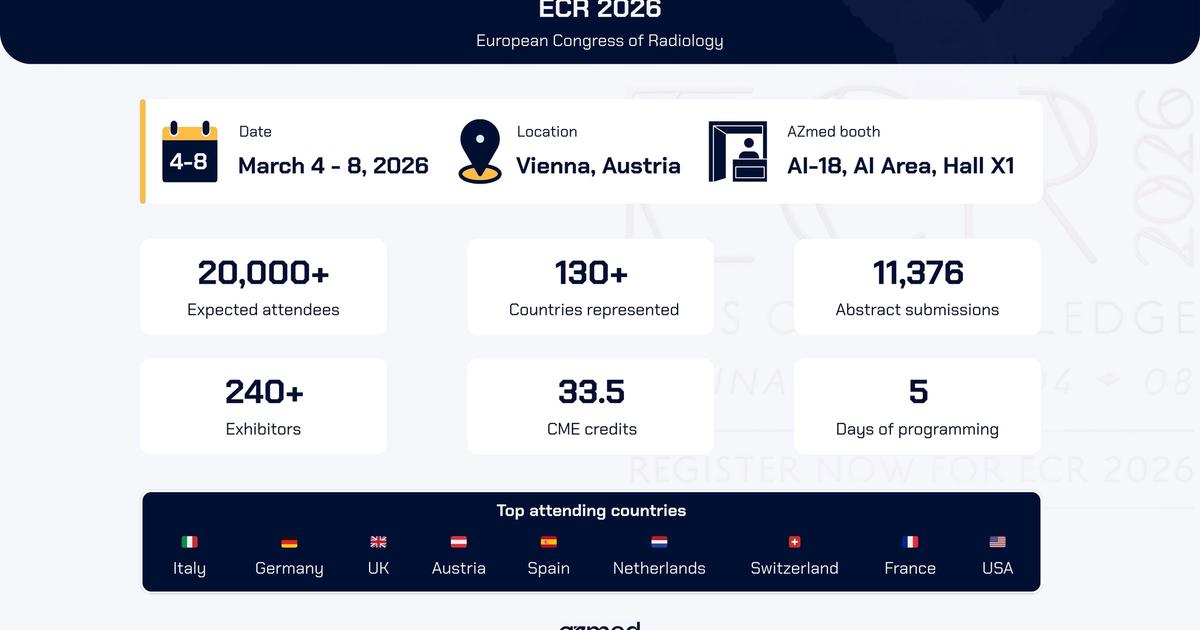
ECR 2026 will be held from March 4th through the 8th, 2026, at the Austria Center Vienna. The theme for ECR 2026 is “Rays of Knowledge,” which focuses on radiologic education and clinical excellence [1]. There is an emphasis on incorporating artificial intelligence into the overall agenda for ECR 2026 under the leadership of Congress President Prof. Minerva Becker. As part of this focus on artificial intelligence, there is also an entire program dedicated to “The Art of AI in Clinical Practice” as part of the “In Focus” program.
Whether you plan to attend ECR 2026 in person or virtually, or just want to keep up with the latest news from ECR, this guide will provide you with all the information you need to prepare for ECR 2026. Inside this guide, you will find the most important registration items, a listing of the can’t-miss sessions on artificial intelligence, and some advice on how best to use your time at ECR 2026.
ECR 2026 at a glance: dates, location and important information
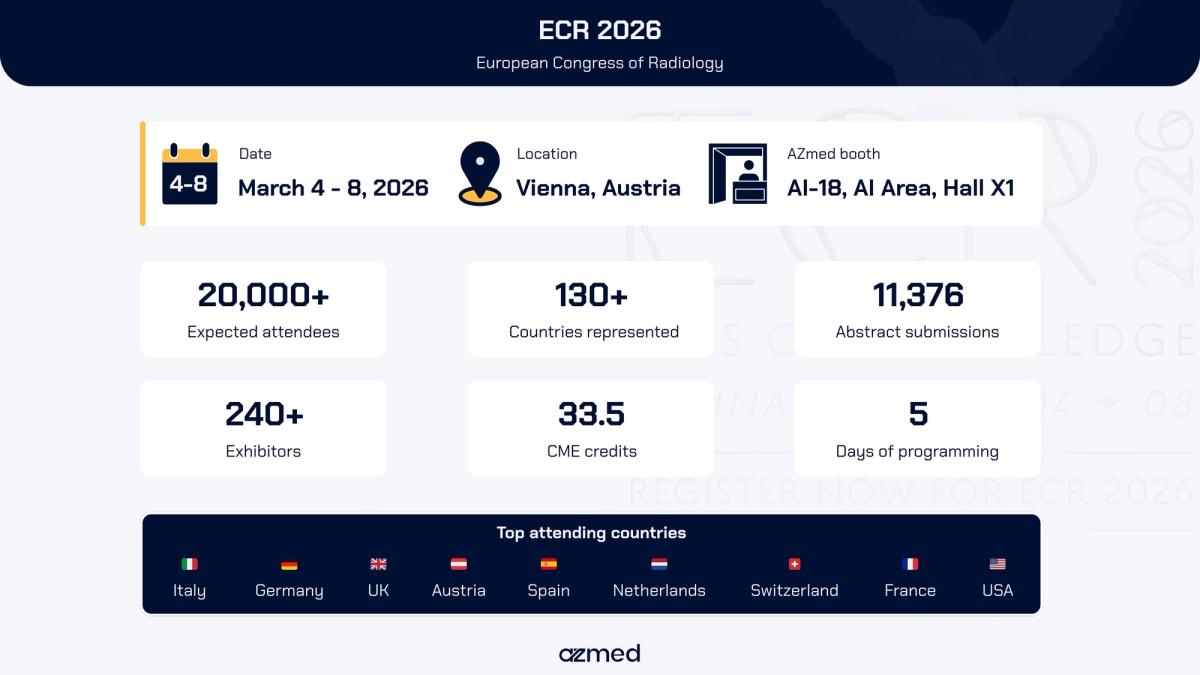
ECR continues to attract an average of more than 20,000 attendees from as many as 130 different countries. Attendance at ECR 2025 reached 20,522, which was a 9% increase from ECR 2024 [2], and ECR 2026 should see continued growth as well. The congress will continue to be hybrid in nature, allowing those unable to attend ECR in Vienna to participate via session videos through ESR Connect.
ECR 2026 saw record numbers of abstract submissions leading up to the congress. There were a total of 11,376 abstracts submitted to the ESR for ECR 2026—a 15% increase from the 2025 event [3]. The number of abstract submissions is indicative of the global radiology community’s desire for sharing information and advancing the profession.
Essential event information
- Date: March 4-8, 2026
- Location: Austria Center Vienna (ACV)
- Format: Hybrid (onsite and online via ESR Connect)
- Expected Attendance: 20,000+ professionals from 130+ countries
- CME Credits: 33.5 European CME credits (ECMEC®s)
Who attends ECR: top countries
ECR attracts many attendees from Europe and around the world. Historically, the largest attendance rates have been from Italy, Germany, the United Kingdom, Austria, Spain, the Netherlands, Switzerland, Romania, France, and Poland [6]. Significant numbers of attendees from the United States, China, Japan, Sweden, Belgium, Denmark, Portugal, and Norway support that ECR is a truly international meeting.
Congress theme and vision
The theme “Rays of Knowledge” reflects the mission of ECR 2026—celebrating education as the foundation of radiology [1]. The imagery depicts both the diagnostic rays from medical images and the figurative rays of wisdom that enable the development of clinical practices. Prof. Becker envisions educational methods that are creative, collaborative across disciplines, and incorporate the application of AI in everyday clinical practice.
Why ECR 2026 is important to radiology professionals
ECR represents a community of innovation, scientific research, and networking that impacts diagnostic imaging worldwide. As the profession faces challenges including shortages of radiologists, increasing volumes of examinations, and rapid advances in technology, ECR provides the education and networking opportunities necessary for successful radiology practice.
In 2025, ECR had 13,596 professional attendees and 6,926 industry representatives at an exhibition with 241 exhibitors from 32 countries displaying innovations in diagnostic imaging [2]. ECR 2026 is projected to have even higher attendance.
Unprecedented scientific program
ECR 2026 has the opportunity to have the highest engagement for the scientific program. The 11,376 abstract submissions recorded have produced the highest number in the history of ECR [3]. Among the many highlights of ECR 2026, four plenary lectures will be presented, ESR Meets sessions will feature France, Japan, Switzerland, and the United States, and a new showcase called “Subspecialties on Stage” will debut. In addition to these presentations, the “How We Do It” sessions will provide radiology workflow information for practical application in daily practice.
CME credits and professional development
ECR 2026 has 33.5 European CME credits available through the European Accreditation Council for Continuing Medical Education (EACCME®) [1]. The sessions are offered in a live format and as an on-demand option through ESR Connect, providing maximum flexibility for the learning experience. ECR is an important venue for CME credits in radiology and to network with colleagues while preparing for the European Diploma in Radiology.
AI to the forefront: the art of AI in clinical practice
AI has evolved from an exploratory concept to a clinical necessity in radiology. This shift is recognized by ECR 2026 through the theme of the “In Focus” program titled: “The Art of AI in Clinical Practice” [1]. This dedicated track will focus on the various aspects of how AI is transforming radiological practice by combining creativity, accuracy, and ethical considerations.
Sessions that discuss the implementation of radiology AI solutions will focus on practical considerations such as governance, integration with clinical workflows, adherence to regulatory requirements, and how to balance automating tasks with relying on a clinician’s judgment. Attendees will learn how medical imaging AI improves equity of access to screening programs, enhances communication between various stakeholders, and redefines oncologic follow-up protocols.
The AI theatre and exhibition
The AI Theatre (Level -2, Room D1) continues to serve as the primary venue for machine learning, deep learning, and big data discussions [1]. It is under the leadership of Prof. Dr. Sotirios Bisdas, the Chair of the ESR Imaging Informatics Subcommittee, and includes keynote presentations, panel discussions, and industry presentations. The live-streamed AI Theatre sessions from ECR 2026 will be available to watch after the conference concludes, as well as on the ECR 2026 website.
Attendees can visit the adjacent AI Exhibition, which showcases companies providing AI-powered solutions for medical imaging. This concentrated space allows attendees to evaluate multiple platforms, compare approaches, and determine which solutions are appropriate for their institutions.
Key AI trends to watch at ECR 2026
AI trends to be discussed at ECR 2026 are mainly centered around governance and oversight frameworks as institutions are moving from pilot projects into enterprise-wide deployment. Radiology workflow integration remains an important focus, as AI tools need to enhance rather than fragment the attentional bandwidth of radiologists. Expect discussion and debate around the ethical use of AI, mitigating algorithmic bias, and navigating varying regulatory environments across jurisdictions.
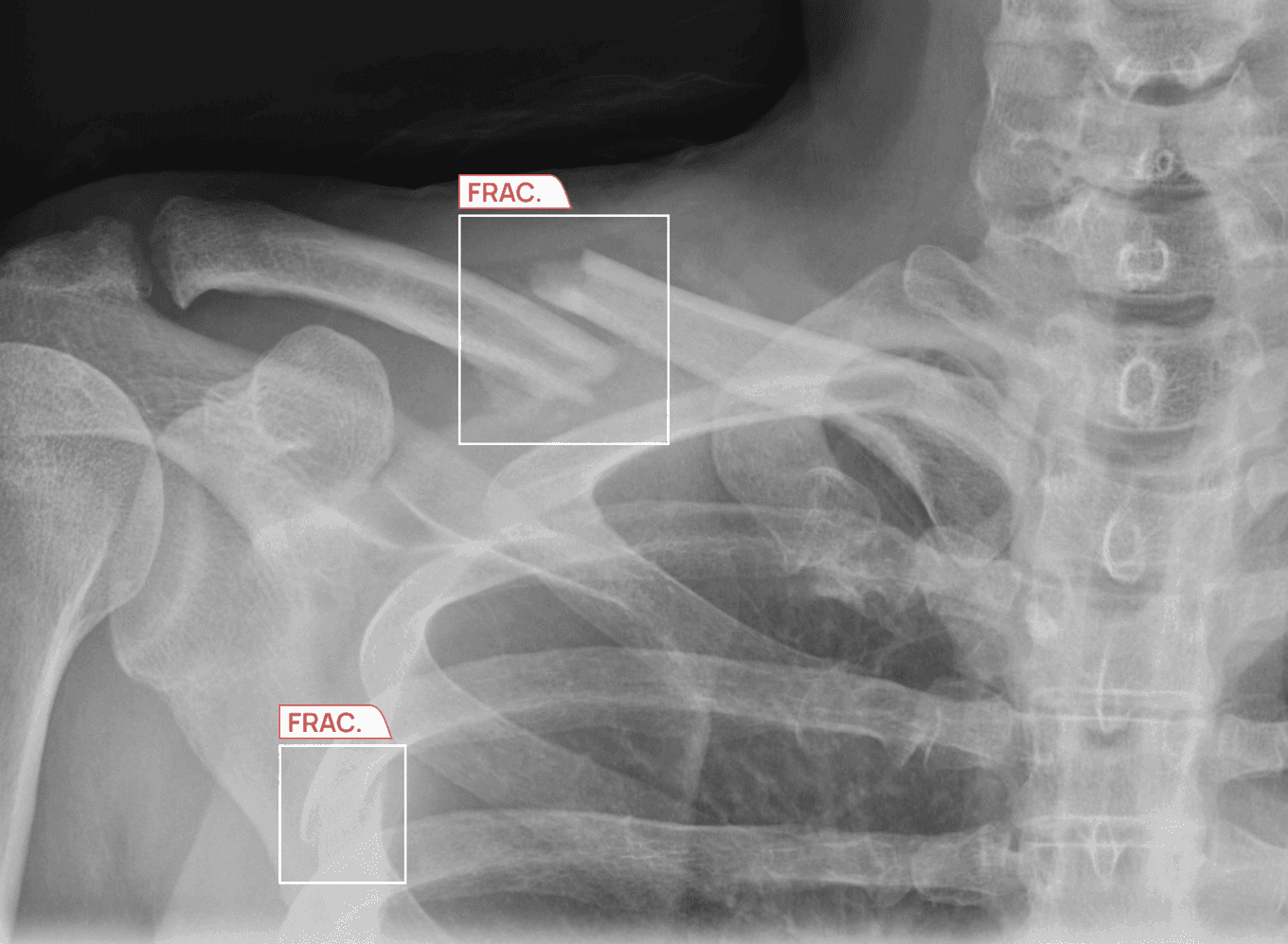
Clinical applications of AI—fracture detection AI, chest X-ray AI analysis, and CT AI solutions for pulmonary nodule identification—continue to mature. Recent peer-reviewed data shows that the use of AI can decrease interpretation time by nearly 27% and improve sensitivity from 86% to 95% [4]. Several vendors at ECR 2026 will present radiology AI solutions that are FDA-cleared and CE-marked and have been validated clinically, including AZmed (AI-18, AI Area, Hall X1). These vendors will provide decision-makers with real-world performance metrics to support their evaluation and procurement of AI solutions.
Strategies for managing your schedule at ECR 2026
ECR 2026 is five days of programming that includes hundreds of sessions and numerous exhibitors—this overwhelming number of options could lead to frustration rather than benefit for many attendees. Establishing a strategic plan to attend sessions and interact with exhibitors can transform an average experience into an enriching one and make the congress much easier to navigate.
The ESR has developed a number of excellent digital resources to assist attendees with navigating their time at ECR 2026. The ECR App has everything you need to create your personalized schedule, navigate the venue, and receive real-time updates. Prior to your arrival at ECR 2026, building your agenda based on your must-attend sessions, booking appointments with exhibitors to see AI demonstrations, and creating blocks of time for networking opportunities will help maximize your investment.
ECR 2026 registration and fees
ECR 2026 registration is now open at myesr.org [1]; members of ESR enjoy discounted registration costs. Authors of abstracts accepted for presentation at this meeting are offered a reduced registration fee of €400. Full Members in Training submitting an abstract are entitled to receive complimentary registration if they qualify. To obtain the best price available for ECR 2026 registration and workshop access at the meeting, early registration is recommended.
Getting around Vienna and the venue
The Austria Center Vienna is accessible via public transport. From Vienna City Centre (Stephansplatz), take the U1 underground line (red line, direction Leopoldau) to Kaisermühlen VIC station. Due to road construction near the venue, the use of public transport is encouraged [1]. In addition, ECR 2026 provides free childcare services for children aged 1-12; however, as space is limited, it is recommended that families reserve spots in advance by February 13.
Making the most of the exhibition floor
With over 240 exhibitors participating in the technical exhibition, prior preparation will reward attendees. Attendees should identify priority booths to visit based on institutional priorities. Because popular vendors book quickly, it is highly recommended that demos be scheduled before and during the event. The AI Exhibition is designed to have all AI vendors in one area, thereby making it efficient to compare multiple solutions.
Key sessions and program highlights
The ECR 2026 program also includes non-AI-focused programming, covering all areas of radiology practice. The program contains cutting-edge research programming as well as practical clinical radiology education programming, ensuring that all attendees will find content relevant to their particular career stage.
Plenary lectures and ESR Meets
The scientific program contains four plenary lectures with high-impact presentations from worldwide thought leaders. The ESR Meets sessions feature France, Japan, Switzerland, and the United States and will provide attendees with unique international perspectives [1]. These sessions offer insights that transcend national borders while showcasing locally successful strategies.
Interactive learning opportunities
The Cube will again be the highlight of ECR’s interventional radiology program, featuring expert-led lectures along with hands-on training at the Simulator Adventure Park [1]. Early-career radiologists will gain firsthand exposure to the newest devices and techniques used in interventional radiology. Image Interpretation Quizzes will allow radiologists to test their diagnostic skills in a collaborative setting. New for 2026, hands-on workshops will provide attendees the opportunity to work interactively with different types of software programs.
For those who cannot attend: virtual access options
ECR’s hybrid learning environment means physical participation in ECR 2026 Vienna is not required to enhance your professional development. The ESR Connect platform will offer full virtual access to the congress [1].
ESR Connect platform
ESR Connect offers live streaming of most sessions, allowing participants the option to view on-demand after the congress concludes. Virtual attendees can acquire CME credits in radiology, engage with educational content at their convenience, and access ECR education 24/7. ESR Connect allows professionals managing demanding clinical schedules to transform ECR from a five-day event into a full year of radiology education activity.
Conclusion
ECR 2026 occurs during a significant transitional time for professionals in radiology. Radiology workforce demand pressures, technological change, and evolving patient expectations are presenting radiology with both hurdles and opportunities for continued positive impact. The theme of this year’s congress, “Rays of Knowledge,” symbolically captures these dualities through the use of the word “Rays,” which represents both the diagnostic rays directed toward pathology as well as the rays of radiology education which will guide the profession in developing a sustainable future.
Radiologists considering the adoption of AI technology will find the convergence of diagnostic imaging innovation and validation at ECR 2026 particularly valuable. AZmed (AI-18, AI Area, Hall X1) will demonstrate live examples of its AI portfolio: AZtrauma, AZchest, AZboneage, AZmeasure, and AZnod, along with peer-reviewed clinical evidence for their efficacy [4,5]. Whether you are attending in person at ECR 2026 Vienna or virtually through ESR Connect, ECR 2026 will give you the knowledge, contacts, and inspiration to advance your practice and improve patient care.
References
- European Society of Radiology. ECR 2026: Rays of Knowledge – Programme and Registration
- European Society of Radiology. Planet Radiology blooms at ECR 2025: Huge attendance at congress. March 4, 2025.
- European Society of Radiology. Record-breaking abstract submissions for ECR 2026. January 9, 2026.
- Fu T, Viswanathan V, Kosaraju V, et al. Assessing the Potential of a Deep Learning Tool to Improve Fracture Detection by Radiologists and Emergency Physicians on Extremity Radiographs. Acad Radiol. 2024;31(5):1943-1951.
- AZmed. FDA 510(k) Clearance: AZchest for lung nodule detection and triage for pneumothorax and pleural effusion. March 31, 2025.
- AuntMinnie. Big crowds return to Vienna for first March ECR in 4 years. March 2023.
Regulatory information
EU - Rayvolve: Medical Device Class IIa in Europe (CE 2797) in compliance with the Medical Device Regulation (2017/745). Rayvolve is a computer-aided diagnosis tool, intended to help radiologists and emergency physicians to detect and localize abnormalities on standard X-rays.US - Medical devices Class II according to the 510K clearances.Rayvolve: is a computer-assisted detection and diagnosis (CAD) software device to assist radiologists and emergency physicians in detecting fractures during the review of radiographs of the musculoskeletal system. Rayvolve is indicated for the adult and pediatric population (≥ 2 years).Rayvolve PTX/PE: is a radiological computer-assisted triage and notification software that analyzes chest x-ray images of patients 18 years of age or older for the presence of pre-specified suspected critical findings (pleural effusion and/or pneumothorax).Rayvolve LN: is a computer-aided detection software device to assist radiologists to identify and mark regions in relation to suspected pulmonary nodules from 6 to 30mm size of patients of 18 years of age or older.US- Rayscan is not cleared or approved yet by the U.S Food and Drug Administration so it is not available yet for sale in the United statesEU - Rayscan: Medical Device Class IIa in Europe (CE 2797) in compliance with the Medical Device Regulation (2017/745). Rayscan is a computer-aided diagnosis suite of tools, intended to assist trained medical professionals in the interpretation of Computed Tomography Scans.Caution: The data mentioned are sourced from internal documents, internal studies and literature reviews. It is for distribution to Health Care Professionals only and should not be relied upon by any other persons. Carefully read the instructions for use before use. Please refer to our Privacy policy on our website. For more information, please contact contact@azmed.co.AZmed 10 rue d’Uzès, 75002 Paris - www.azmed.co - RCS Laval B 841 673 601© 2026 AZmed – All rights reserved. MM-26-01