How orthopedic AI is transforming X-ray imaging in 2026

- Pauline Beaumel, AZmed

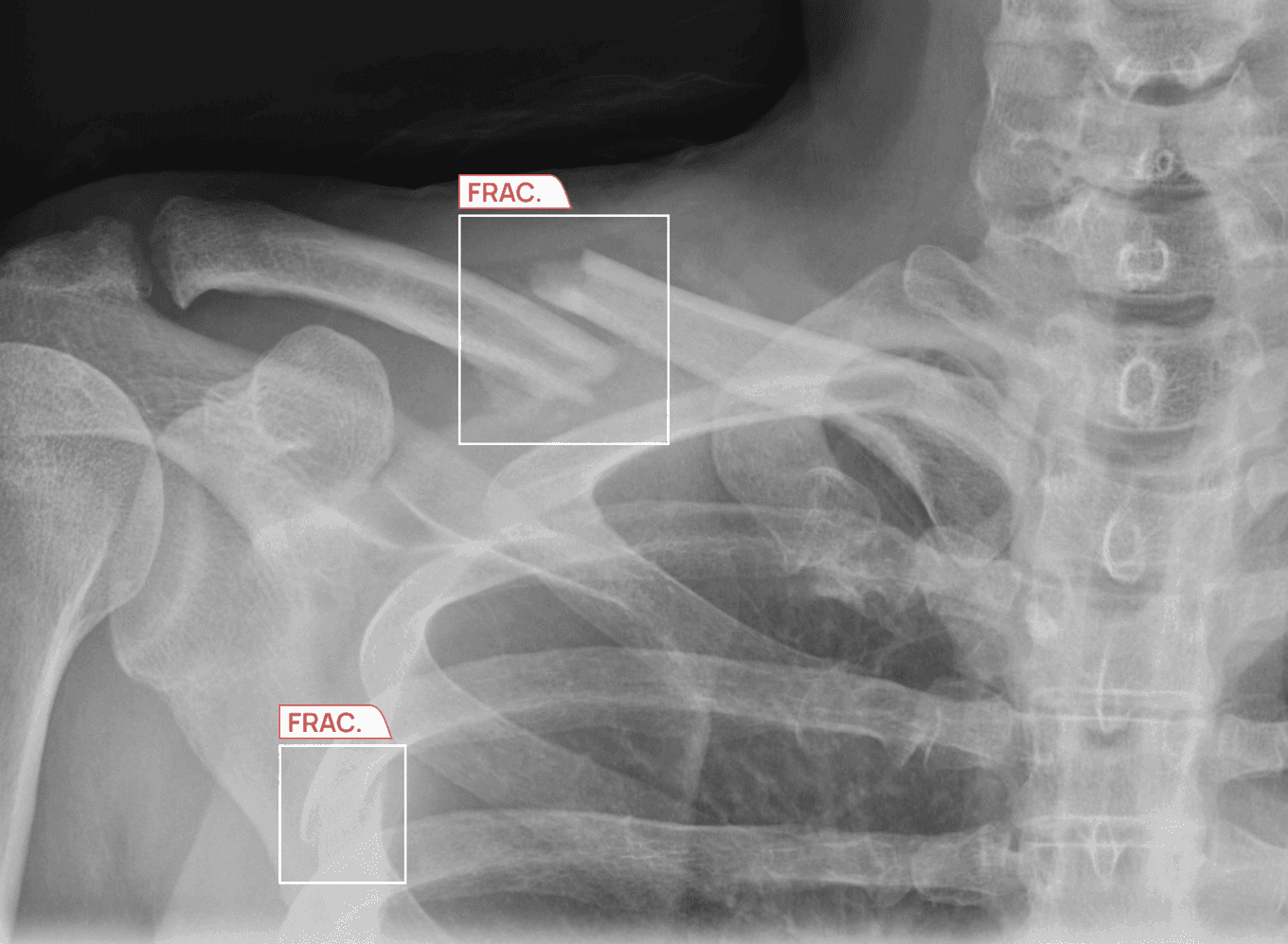
Orthopedic imaging primarily relies on X-ray scans to detect bone injuries or anomalies. However, as the volume of imaging continues to increase, the number of radiologists in many healthcare institutions is declining. Orthopedic departments must find methods to ensure diagnostic accuracy when they face increased workload expectations. This growing demand is what makes fracture detection for orthopedics an important area for AI adoption.
Many healthcare organizations are now investigating the use of orthopedic imaging AI to assist with their diagnostic needs. Deep learning algorithms can examine radiographic images and present clinicians with potential abnormalities for further investigation.
This article discusses the available clinical evidence related to AI fracture detection in real-world settings. It also examines how effectively these algorithms perform in current orthopedic practice.
Key points of summary:
- AI for fracture detection uses deep learning algorithms to identify and flag possible abnormal findings on X-rays. These findings are then presented to a radiologist for evaluation and ultimately to an orthopedic surgeon.
- Clinical evidence shows that AI can improve bone fracture detection in real-world practice. For example, NICE reported that average clinician sensitivity increased from 86.5% to 95.5% with AI support.
- From existing data, AI application to axial fractures (i.e., spine and pelvis) and complex multi-fracture scenarios appears feasible for clinical orthopedics. However, additional published research is necessary to validate AI for osteoporotic fracture risk, implant failure detection, preoperative planning assistance, and pediatric fracture detection on radiographs.
- Orthopedic surgeons should conduct in-depth reviews of applicable, peer-reviewed literature related to orthopedic imaging AI before considering any specific technology. They should also evaluate whether their health system has obtained regulatory clearance for the AI tool and whether it integrates into existing PACS/RIS systems.
What is the role of AI in orthopedic imaging
Orthopedic imaging AI acts as a diagnostic assistant for improved accuracy when evaluating patients. The AI uses deep learning algorithms to review radiographs and identify suspicious areas.
AI is not designed to replace radiologists. Rather, it serves as a second opinion on radiograph interpretation and as a triage tool. It screens routine radiographs for suspicious areas so radiologists can focus on the areas of greatest criticality.
Some of the most frequently used applications of AI in orthopedic X-ray imaging include:
- Detection of fractures, dislocations and joint effusions within a radiograph
- Quickly and accurately obtaining musculoskeletal measurements from radiographs
- Estimating the bone age (skeletal maturity) of a child from a radiograph
These capabilities position MSK radiology AI as a practical tool for orthopedic departments managing high imaging volumes.
Integration and regulatory status
Many orthopedic imaging AI products interface directly with current PACS and/or RIS systems. Radiologists do not need any special steps or different interfaces to use them. As with all clinically meaningful imaging technologies, these tools have either CE marking, FDA clearance, or both. Their effectiveness has been demonstrated in numerous clinical studies in real-world settings, and hospitals are scaling above and beyond pilot programs.
For example, AZmed provides the Rayvolve® AI Suite, which includes tools like AZtrauma for fracture detection, AZchest for chest pathology detection, AZmeasure for automated orthopedic measurements, and AZboneage for bone age estimation. The company has deployed Rayvolve® in multiple countries with peer-reviewed documentation supporting its effectiveness. Rayvolve® holds both CE marking and FDA clearance.
So, keep reading to learn about the state of the art in X-ray AI radiology and what the available clinical evidence shows.
What does the clinical evidence indicate about AI fracture detection in 2026?
The following research supports the effective detection of fractures by artificial intelligence in a clinical environment. Many hospitals around the globe currently deploy these tools in clinical settings.
Study 1 (scale of validation): Cohen et al. (2026)
Cohen et al. (2026) published one of the largest real-world evaluations of X-ray AI radiology in Radiography (Elsevier). The study title: Worldwide evaluation of an entire suite of AI radiographic technologies on 258,373 X-rays from 26 countries [1].
The team analyzed 258,373 X-rays from 100 hospitals across 26 countries. This makes it the largest multicenter clinical evaluation of an X-ray AI method published in peer-reviewed journals to date. The AZtrauma algorithm showed an AUC of 98.3%, a sensitivity of 97.4%, and a specificity of 96.4%.
These results matter because algorithms trained at one location often perform well locally. However, they may not provide consistent results at different facilities. Imaging protocols, machines, and platforms vary significantly by geography. Patient demographics and disease prevalence also differ across populations. A multicenter evaluation on this scale directly validates whether an algorithm works consistently across differing centers.
Study 2 (real-world performance): Luiken et al. (2025)
Researchers at the Technical University of Munich published Evaluation of commercial AI algorithms for fractures, effusions, and dislocation detection on clinical data in a real-world setting in Radiography [2]. This study details how various AI radiology tools perform with real patient data.
The study evaluated three commercial algorithms (including AZmed’s AZtrauma) using data from 1,037 patients across 22 anatomical regions. AZmed demonstrated the highest AUC of 84.88% for overall fracture and fracture-dislocation detection. None of the tested tools achieved above 91% accuracy for acute fracture diagnosis. Therefore, AI radiology tools should serve as secondary support to aid the diagnostic process, not as replacements for clinical radiologist decision-making.
Study 3 (reader performance improvement): NICE Early Value Assessment in January 2025
This assessment evaluated the effect of AI on reader performance during radiographic interpretation. NICE published its Early Value Assessment (HTG739) in January 2025 [3]. The assessment reviewed 16 diagnostic accuracy studies investigating AI-assisted fracture detection.
The average clinician sensitivity increased from 86.5% to 95.5% with AI support. Both radiologists and emergency physicians identified more fractures when using artificial intelligence as a second reader.
NICE approved four AI fracture detection tools for NHS deployment during the evidence-generation phase. AZtrauma was one of the four tools selected.
These results demonstrate the value of AI for healthcare providers in high-pressure environments like emergency departments. High patient volumes and short assessment timeframes can lead to underdiagnosis. AI tools provide an additional layer of diagnostic safety. These findings reinforce the growing role of AI in bone fracture detection across urgent care settings.
Studies 4 and 5 (pediatric orthopedic imaging): Diagnostic & Interventional Imaging and Springer Nature
Fractures in children can mimic fracture lines due to open growth plates and/or normal developmental variations. Children also struggle to remain still during imaging, leading to more motion artifacts than in adults. The volume of literature on pediatric fracture detection remains smaller than for adults. For this reason, external validation in a pediatric cohort has particular significance. Two independent studies evaluated AZtrauma's performance in pediatric populations without applying an age limit.
1. Diagnostic & Interventional Imaging study
This study included 2,549 pediatric subjects. It evaluated AZtrauma's ability to detect fractures on radiographs using an externally validated, commercially available deep learning algorithm [5]. The algorithm achieved high performance: sensitivity of 95.7%, specificity of 91.2%, and accuracy of 92.6%. These results are notable given the inherent anatomical variability and imaging challenges typical in pediatric cases.
2. Springer Nature pediatric validation study
Published in Pediatric Radiology, the study validated AZtrauma using 878 pediatric subjects [6]. AZtrauma's performance matched that of senior radiology residents and exceeded the ability of emergency physicians. Additionally, AZtrauma detected 3 fractures (1.6%) that specialist pediatric radiologists did not initially catch.
This finding is particularly important in hospitals where specialized radiologist coverage is limited in the evenings, on weekends, or during high-volume periods.
Study 6 (workflow impact): SimonMed multicenter retrospective study
In addition to diagnostic accuracy, radiology departments also evaluate AI based on its workflow impact.
A large retrospective analysis presented at RSNA 2023 reviewed workflow processes before and after AI deployment across more than 330,000 imaging examinations in the SimonMed Imaging network [7]. After AI deployment, turnaround time for fracture reports dropped from 48 hours to 8.3 hours. The fracture detection rate also increased from 10.4% to 11.8%.
AI-assisted triage provides expedited feedback to clinicians for urgent findings. It also helps identify fractures that may otherwise go undetected or experience reporting delays.
Where AI has the strongest evidence in orthopedics
AI shows the strongest evidence in identifying appendicular fractures on X-ray, including wrist, ankle, shoulder, elbow, and foot fractures. These applications have the most mature clinical validation in the literature and the broadest evidence of successful implementation in real-world settings. More details are outlined below.
Appendicular fractures: Strongest evidence
Systematic reviews show that the highest clinically validated algorithms focus on distal radius, ankle, elbow, shoulder, and foot fractures [8]. In controlled studies, these algorithms typically achieve sensitivity levels greater than 90%. Several have also been tested in multicenter patient cohorts. Emergency departments, teleradiology services, and high-volume outpatient imaging networks have all demonstrated successful early implementation. Literature supports that these bone fracture AI tools help radiologists identify subtle fractures usually missed during initial interpretation.
Axial and complex fractures: Emerging evidence
More researchers are examining AI for axial fractures (spine and pelvis) and for identifying multiple fractured bones. Performance in these areas is more variable and less validated than for appendicular fractures. Overlapping structures, variation in fracture morphology, and greater imaging complexity reduce algorithm consistency [8].
Early-stage applications
Osteoporotic fracture risk prediction, implant failure detection, and preoperative clinical support are ongoing research areas. However, peer-reviewed commercial validation remains limited.
Pediatric-specific considerations
Finding fractures in pediatric patients is more difficult than in adults, regardless of the radiologist's training. Published studies are increasing in this area, but the available volume is only a fraction of what exists for adult patients. The data is encouraging, but caution should be exercised when applying results to clinical decision-making.
Hospitals need to understand the requirements for adopting responsible AI. Adhering to the right guidelines for adopting orthopedic imaging AI will minimize risks and enhance patient safety.
What responsible orthopedic AI adoption looks like
Successful responsible orthopedic AI adoption must consider these five foundational principles:
1. Peer-reviewed validation
All orthopedic imaging AI tools must have underlying peer-reviewed studies published in indexed journals, not just vendor white papers or proprietary benchmarks. Clinical data analysis within peer-reviewed studies holds more weight than vendor-produced white papers, which have limited scientific rigor.
2. Regulatory clearance
CE marking in the EU and/or FDA clearance in the US indicate that the AI product meets minimum safety and validation requirements. These certifications do not guarantee how a given AI tool will behave at your facility or integrate into existing workflows. However, they provide the initial assurance of safety. Do not use any AI technology without appropriate regulatory clearance, as it puts patient safety at risk.
3. National guidance
National guidance for AI technology is still evolving. However, governing bodies now recognize how AI radiology can reduce radiologist burnout. In January 2025, NICE became the first national guideline body to formally endorse AI fracture detection tools for emergency care within the NHS [3]. Other healthcare systems may soon follow suit.
4. Workflow integration
A main objective of AI in radiology is to save time and reduce diagnostic errors by surfacing urgent cases while screening routine radiographs in the PACS/RIS environment. AI tools that add extra steps or change existing workflows create friction. The best tools plug into existing PACS/RIS environments and run in the background.
5. Ongoing performance monitoring
Ensure continuous performance monitoring from your chosen AI tool. It must support ongoing post-market surveillance and allow for local calibration. Patient populations, technology, and imaging equipment will change over time.
Incorporate these five principles when evaluating orthopedic imaging AI tools. They will help you move from evidence-based research to evidence-based clinical practice in everyday orthopedic imaging.
Conclusion
X-ray AI radiology has developed much more than just pilot projects. There is now a vast amount of peer-reviewed multicenter evidence supporting AI across many different clinical settings. National health agencies have issued formal guidance based upon their confidence in these technologies.
Hospitals continue to use AI to assist with workforce shortages and increasing workloads in emergency and radiology departments.
The question is no longer whether AI can help with orthopedic imaging. It is which tools have sufficient clinical evidence to allow for responsible hospital integration. For those interested in exploring additional evidence, the studies referenced in this article are a good starting point to evaluate bone fracture AI and fracture detection for orthopedics in your department.
References
- Cohen et al. "Performance of a complete AI radiographic suite across 258,373 X-rays from 26 countries: A worldwide evaluation." Radiography (Elsevier), 2026.
- Luiken I, Lemke T, Komenda A, et al. "Evaluation of commercial AI algorithms for the detection of fractures, effusions, and dislocations on real-world clinical data: A prospective registry study." Radiography, 2025;31(6):103189.
- NICE. "Artificial intelligence (AI) technologies to help detect fractures on X-rays in urgent care: early value assessment (HTG739)." Published January 14, 2025.
- Society of Radiographers. "NICE publishes new guidance on the use of AI to assist with interpretation of urgent care X-rays." January 2025.
- Dupuis M, Delbos L, Veil R, Adamsbaum C. "External validation of a commercially available deep learning algorithm for fracture detection in children." Diagnostic and Interventional Imaging, 2022;103(3):151-159.
- Gasmi I, Calinghen A, Parienti JJ, Belloy F, Fohlen A, Pelage JP. "Comparison of diagnostic performance of a deep learning algorithm, emergency physicians, junior radiologists and senior radiologists in the detection of appendicular fractures in children." Pediatric Radiology, 2023;53(8):1675-1684.
- Raj SD, Sadegi B, Simon J. "Radiologist worklist reprioritization utilizing artificial intelligence: measuring turnaround time for fracture detection on MSK X-rays sourced from a nationwide outpatient imaging practice." Presented at RSNA 2023, November 26-30, 2023.
- Hansen et al. "Artificial intelligence in commercial fracture detection products: a systematic review and meta-analysis of diagnostic test accuracy." Scientific Reports, 2024.
Regulatory information
US - Medical device Class II according to the 510K clearances. Rayvolve: is a computer-assisted detection and diagnosis (CAD) software device to assist radiologists and emergency physicians in detecting fractures during the review of radiographs of the musculoskeletal system. Rayvolve is indicated for adult and pediatric population (≥ 2 years).Rayvolve PTX/PE: is a radiological computer-assisted triage and notification software that analyzes chest x-ray images of patients 18 years of age or older for the presence of pre-specified suspected critical findings (pleural effusion and/or pneumothorax). Rayvolve LN: is a computer-aided detection software device to assist radiologists to identify and mark regions in relation to suspected pulmonary nodules from 6 to 30mm size of patients of 18 years of age or olderEU - Rayvolve: Medical Device Class IIa in Europe (CE 2797) in compliance with the Medical Device Regulation (2017/745). Rayvolve is a computer-aided diagnosis tool, intended to help radiologists and emergency physicians to detect and localize abnormalities on standard X-rays.Caution: The data mentioned are sourced from internal documents, internal studies and literature reviews. It is for distribution to Health Care Professionals only and should not be relied upon by any other persons. Carefully read the instructions for use before use. Please refer to our Privacy policy on our website For more information, please contact contact@azmed.co.AZmed 10 rue d’Uzès, 75002 Paris - www.azmed.co - RCS Laval B 841 673 601© 2026 AZmed – All rights reserved. MM-26-11