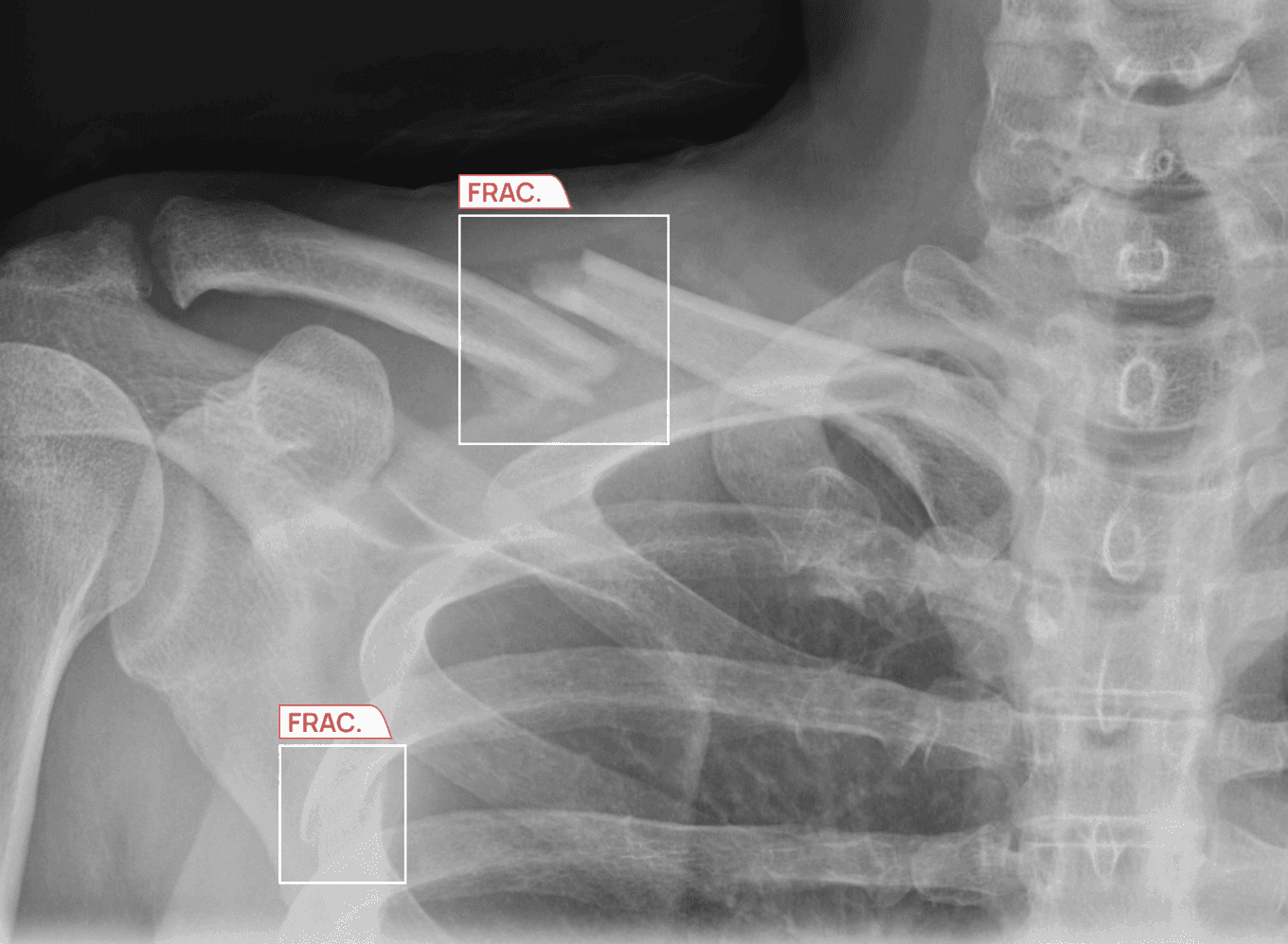
Five years of AI-assisted X-rays with AZmed at CHU de Reims


PARIS, October 7, 2026 -- AZmed, one of the leading AI companies in medical imaging, today announced that the radiology department at CHU de Reims has used AZtrauma for fracture detection across all its patients since 2021, alongside AZchest for the analysis of chest X-rays. The department has also published its own clinical evaluation of AI applied to pediatric trauma in the journal Pediatric Radiology.
French hospitals have to interpret a growing number of X-rays with radiologist staffing that is not keeping pace. According to the national federation of radiologists, about a third of hospital radiologist posts are vacant. Missed fractures are among the most frequent causes of diagnostic error in X-ray interpretation, and images taken outside working hours are often read first by residents. In France, children accounted for more than a quarter of emergency department visits in 2019, according to DREES.
Both modules are part of Rayvolve, AZmed's CE-marked AI software suite for X-ray. Results reach the radiologist at the same time as the images, with no additional login and no extra step in the reading workflow.
AZtrauma is used to analyze trauma X-rays in children and adults. The module detects fractures, dislocations and joint effusions, as well as tumoral, degenerative and osteoarthritic lesions. This year, as part of a global evaluation published in the journal Radiography, the module was tested on 195,706 musculoskeletal X-rays, within a set of 258,373 images from 100 centers across 26 countries, the largest study of X-ray AI published to date. It achieved an area under the curve (AUC) of 0.983, with 97.4% sensitivity and 96.4% specificity.
"Since 2021, we have used Rayvolve for fracture detection across all our patients," said Dr. Aline Carsin-Vu, pediatric radiologist at CHU de Reims. "As a university hospital, we find that the tool helps confirm the diagnosis, particularly for doctors in training. It has also reduced the number of patients called back after a night-time emergency visit for fractures that were initially missed, especially in pediatrics."
The chest X-ray is another very common exam in emergency settings, and AZchest analyzes it to identify chest abnormalities. In that same evaluation, covering 61,418 chest X-rays, the module reached an AUC of 0.978, with 96.7% sensitivity and 87.9% specificity.
The Reims study, published in Pediatric Radiology, was conducted independently of AZmed and looked only at fracture detection. The team included 366 children under 18. They were referred to the pediatric emergency department for limb trauma. Two residents read the X-rays, first without AI and then with AI. The performance of two commercially available fracture detection algorithms, including Rayvolve, was compared. In this pediatric population, Rayvolve reached a specificity of 93.6%, and AI took the less experienced resident from 87.0% to 91.3% sensitivity and from 88.2% to 93.2% specificity, a significant improvement in AUC, from 0.867 to 0.923.
"Given the frequent interruptions we face, Rayvolve draws my attention to subtle abnormalities I might otherwise have missed," Dr. Carsin-Vu added. "The radiologist always makes the final decision, but that second look is always there."
"Our goal, everywhere in the world, is to be the trusted partner of every physician who reads a medical image, and that trust is built over years, not on demonstrations. Five years of daily use at CHU de Reims, validated by the department itself, is what that looks like in practice," said Julien VIDAL, CEO of AZmed. "Every module in the AZmed suite went through clinical validation before it reached a radiologist's hands, and that is what makes a partnership like this one possible."
"In pediatrics, a false alarm can cost a child unnecessary immobilization and unnecessary exams. That is why specificity matters as much as detection, and that is what the CHU de Reims team measured themselves. Rayvolve therefore helps limit false alarms," added Samuel Rizoulières, Account Manager France at AZmed.
Five years of continuous use, combined with an evaluation the department ran and published itself, is the kind of reference that establishes AZmed in French university hospitals.
About AZmed
Founded in 2018, AZmed is a European MedTech company developing AI solutions for medical imaging. Its Rayvolve AI suite includes FDA-cleared and CE-marked tools, while its Rayscan line is CE-marked. Used by more than 2,500 healthcare facilities worldwide, AZmed’s solutions improve diagnostic consistency and operational efficiency in medical imaging. Additional resources on AI-supported fracture detection and chest imaging are available on AZmed’s website.